
When it comes to lung cancer, there is some bad news and some good news too.
Lung cancer is the number one cause of cancer-related deaths in the United States and Kentucky has some of the highest cancer death rates in the country. Our region has some of the highest rates of lung cancer in Kentucky.
The American Cancer Society estimates that the lifetime risk of developing invasive lung cancer is 1 in 15 for men and 1 in 17 for women.
The good news is that finding lung cancer early is our best hope to treat it. Research shows that more than 80 percent of lung cancers may be cured if detected early.
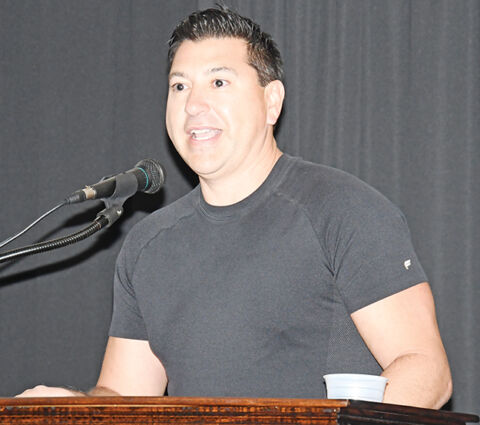
Dr. Kevin Croce, radiology director at Baptist Health Corbin, spoke to members of the Southern Kentucky Chamber of Commerce Tuesday about the need for more lung cancer screenings so it can be detected early and patients will have better outcomes.
The U.S. Preventive Services Task Force recommends yearly lung cancer screening for people smoking one pack or more of cigarettes per day for 20 years. This is whether you are a current or former smoker and are between the ages of 50 and 80 years old.
Croce said that Baptist Health Corbin offers a quick, painless way to detect lung cancer early with its Lung Cancer Screening program that is designed to identify potential lung cancers before they cause symptoms.
The screening, which is known as a low-dose computed tomography (CT) scan, may be covered by your insurance company or Medicare. In the event that your insurance doesn’t cover the screening, Baptist Health officials noted that the most it would cost anyone just to pay for it themselves is no more than $150.
There is no preparation for this scan and it does not require needles, injections or contract. Most scans take less than 15 minutes and you can resume normal activities immediately after the scans.
Baptist Health Corbin has performed over 2,242 of these scans over the last 20 months, which is 110 exams per month with plenty of room to do more, Croce noted.
“We are proud to be able to offer this service here,” Croce said.
The hospital is also using AI tools for everything from helping to check for signs of cancer in the scans to assisting with referrals, sending exam reminders, and for non-lung findings follow-ups.